

2025-08-28T05:45:49
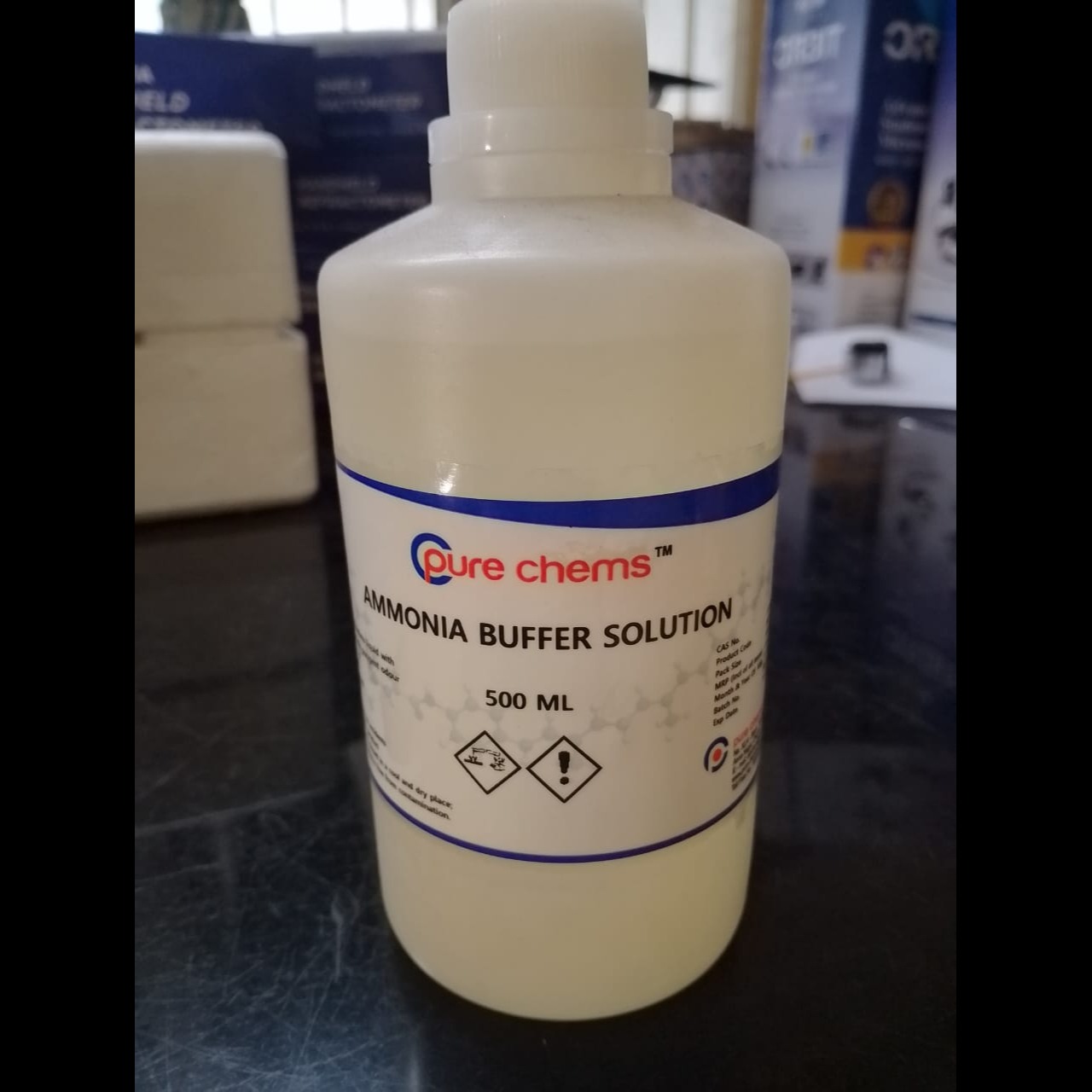
An ammonia buffer solution is a chemically stable mixture of a weak base (ammonia or ammonium hydroxide) and its conjugate acid salt (like ammonium chloride) that resists changes in pH, typically in a high pH range (e.g., pH 9-11). It is used to maintain stable pH levels in chemical analysis, the calibration of pH meters, and various scientific and industrial processes. To prepare it, a measured amount of ammonium chloride is dissolved in water, and then a specific volume of ammonium hydroxide solution is added and diluted to a final volume, often in a volumetric flask, creating a clear, colorless liquid with a distinctive ammoniacal odor.Common uses: pH Meter Calibration:Used to establish and maintain a precise hydrogen ion activity (pH) for calibrating pH meters. Analytical Procedures:Helps to maintain stability and consistent conditions in various chemical and biochemical analyses. Industrial Applications:Used in various industries where pH stability is crucial, such as in certain brewing or chemical manufacturing processes. Common usesThe pH-stabilizing properties of an ammonia buffer make it valuable for many applications in chemistry and other sciences: Complexometric titrations: Used to maintain the pH during certain titrations, particularly with Eriochrome Black T indicator, for determining the hardness of water. Analytical chemistry: Employed in various analytical procedures, such as the ultra-sensitive detection of heavy metals like lead and nickel. pH meter calibration: Provides a reliable standard for calibrating pH meters, especially for the alkaline range. Biological and enzymatic studies: Used to maintain an optimal pH range for certain enzyme-catalyzed reactions. The central nervous system also uses an ammonia buffering mechanism to control brain pH. Sodium analysis: In a sodium analyzer using an ion-selective electrode, an ammonia buffer stabilizes the pH to minimize interference from other ions. Protein crystallization: Can be used in preparing samples for mass spectrometry or for protein crystallization.
Have a question? Ask here!
Required fields are marked *