

2025-10-24T10:17:28
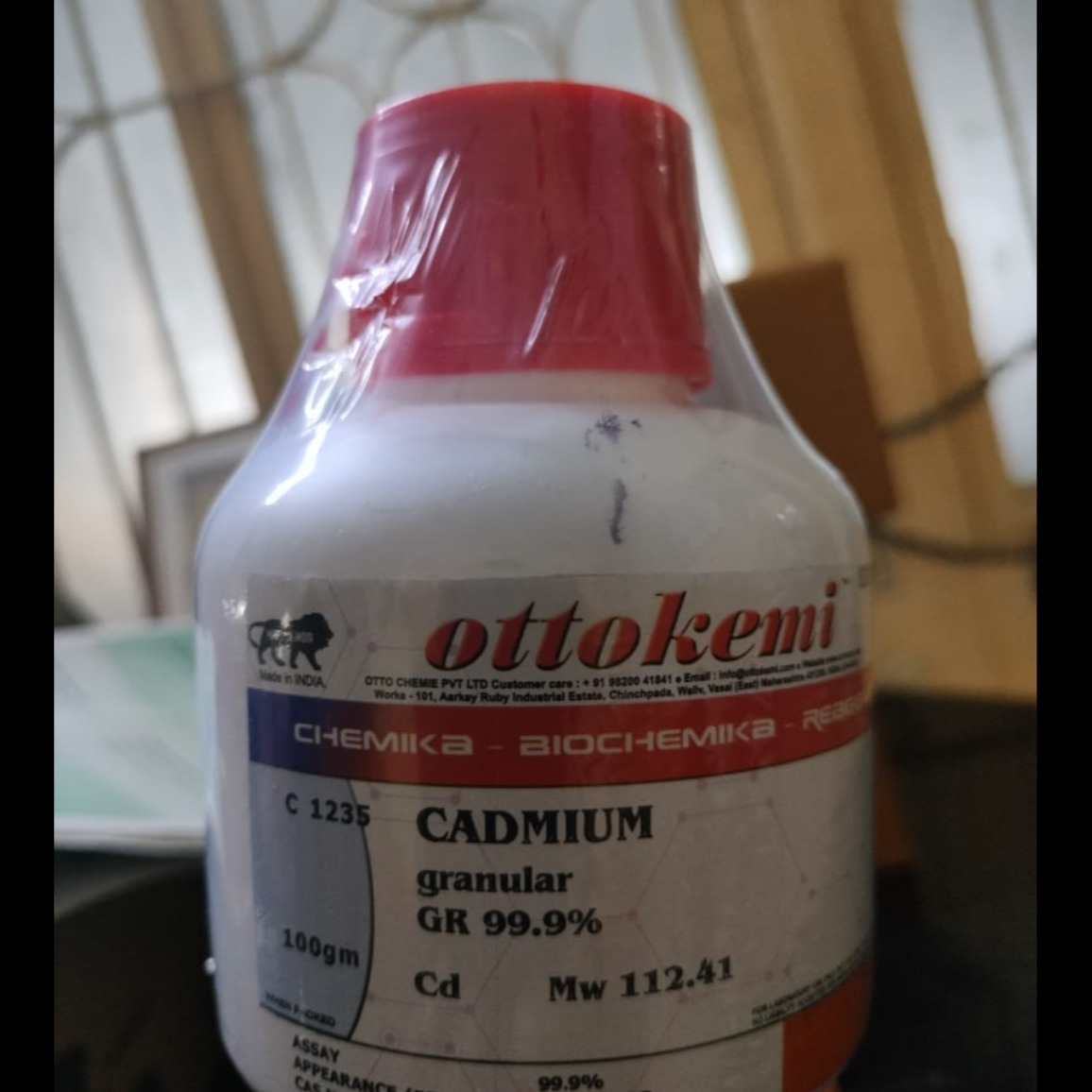
Cadmium granular is a form of cadmium metal, an element with atomic number 48, known for its high density, corrosion resistance, and toxicity. Its properties include a melting point of approximately 321∘C321 space raised to the composed with power cap C321∘ and a boiling point of about 767∘C767 space raised to the composed with power cap C767∘. Cadmium granular is used in applications like batteries, alloys, coatings, and as a catalyst, but its high toxicity requires careful handling. Uses and applicationsDespite its toxicity, cadmium's unique properties make it useful in several industrial processes: Batteries: A key component in nickel-cadmium (Ni-Cd) rechargeable batteries. Electroplating: Provides a corrosion-resistant coating for steel and other metals, which is widely used in aerospace, automotive, and military applications. Alloys: Used to create specialized alloys to improve machinability or modify physical properties like the melting point. For example, a silver-indium-cadmium alloy is used for control rods in nuclear reactors because of cadmium's ability to absorb neutrons. Pigments: Cadmium compounds, such as cadmium sulfide and cadmium selenide, are used to produce bright and stable yellow, orange, and red pigments for paints, plastics, and ceramics. Plastics: Acts as a stabilizer in polyvinyl chloride (PVC) to protect against degradation from light and heat. Electronics: Used to produce semiconductor materials, such as cadmium telluride (CdTe), which is used in photovoltaic solar cells. Safety and handlingCadmium is a highly toxic heavy metal that poses significant health and environmental risks. Health hazards: Exposure can occur through inhalation or ingestion. It is a known human carcinogen and can cause damage to multiple organs, including the kidneys, lungs, liver, and bones, with prolonged exposure. It is also suspected of causing genetic defects and damaging fertility and the unborn child. Environmental hazards: Cadmium is very toxic to aquatic life and can cause long-lasting environmental effects. Once in the environment, it persists in soil and sediments and can bioaccumulate up the food chain. Personal protective equipment (PPE): Professional users must wear appropriate PPE, including respiratory protection (if dust is generated), protective clothing, and gloves, to prevent inhalation and contact. Storage and disposal: Granular cadmium should be stored in a cool, dry, and well-ventilated area in a tightly closed container, away from incompatible materials like strong acids and oxidizing agents. Due to its hazardous nature, waste must be disposed of according to official regulations by a licensed professional waste disposal service.
Have a question? Ask here!
Required fields are marked *