

2025-10-17T08:30:10
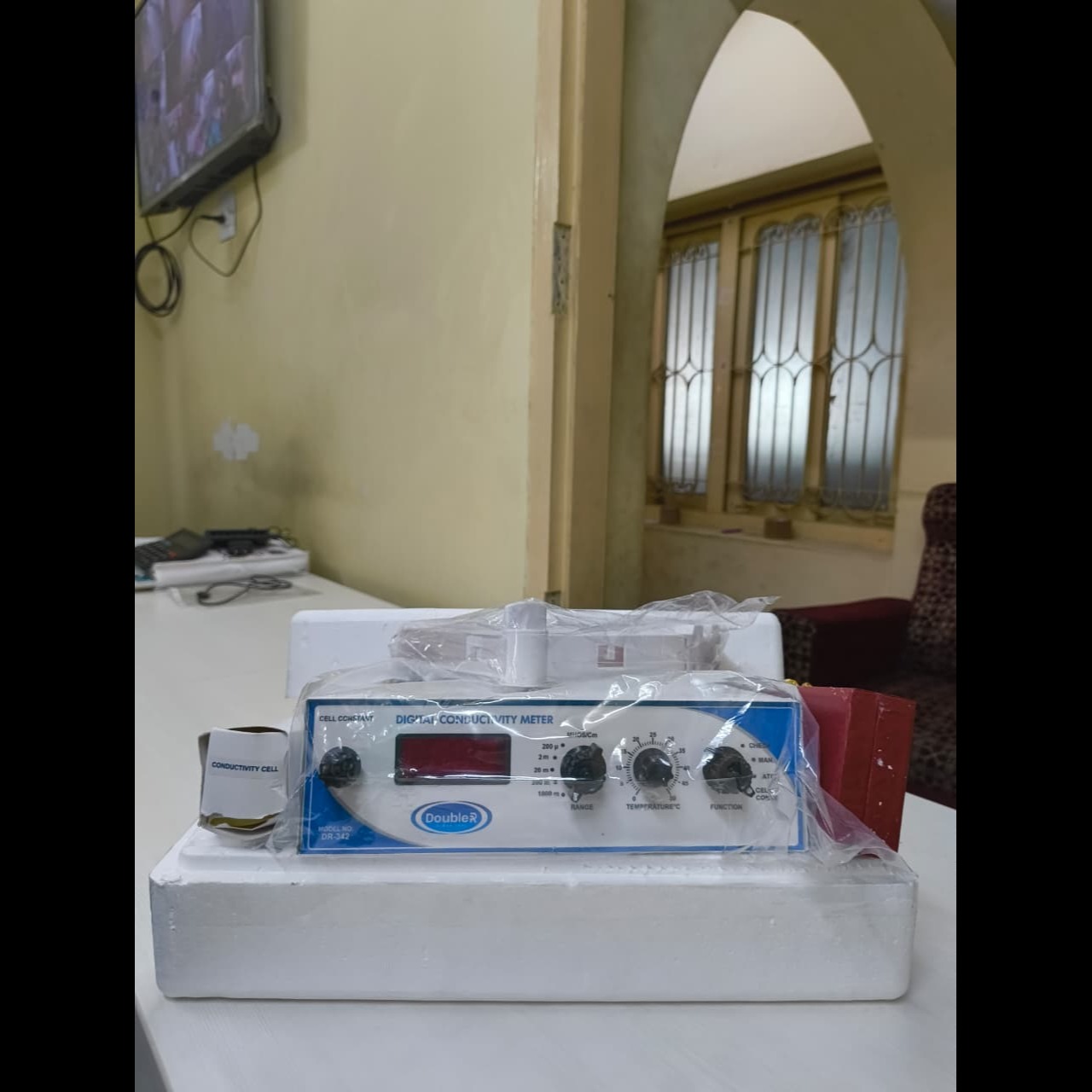
A conductivity meter measures a solution's ability to conduct electricity, which is used to determine the concentration of dissolved ions like salts and nutrients. These meters are vital for water quality testing, agriculture, aquaculture, and various industrial processes, providing data on purity, contamination, and nutrient levels. They work by applying a voltage to an electrode and measuring the resulting current, with accuracy often dependent on temperature correction. How it works Principle: Based on the principle that materials with more ions conduct electricity better. The meter applies a voltage to an immersed sensor (electrode) and measures the electrical current that flows through the solution. Measurement: The amount of current is directly related to the concentration of ions; more ions mean higher conductivity. Temperature compensation: Since temperature affects conductivity, most meters include a temperature sensor to automatically adjust the reading to a standard temperature, ensuring accuracy. Cell constant: The specific geometry of the sensor's electrodes is accounted for by a 'cell constant' which is used to calculate the final conductivity value. Calibration: Meters are calibrated using standard solutions to ensure accurate readings. Key features and types Types: Common types include portable handheld meters, benchtop models for lab use, and online systems for continuous monitoring in industrial settings. Measurement units: Conductivity is commonly measured in Siemens per centimeter (S/cm) or microSiemens per centimeter (µS/cm). Associated measurements: Many meters can also measure related parameters like Total Dissolved Solids (TDS) and salinity. Some advanced models can even measure pH simultaneously. Data logging: Modern meters often feature data storage and the ability to export data to a computer via USB. Common applications Water quality: Testing natural water, drinking water, wastewater, and hydroponic nutrient solutions. Agriculture: Monitoring soil salinity and nutrient concentrations in fertilizers. Industrial processes: Ensuring cleanliness in pharmaceutical manufacturing, monitoring alkali concentration in pulp mills, and detecting leaks in electrical conductors. Aquaculture: Maintaining optimal water conditions in fish farming.
Have a question? Ask here!
Required fields are marked *