

2025-11-03T08:01:33
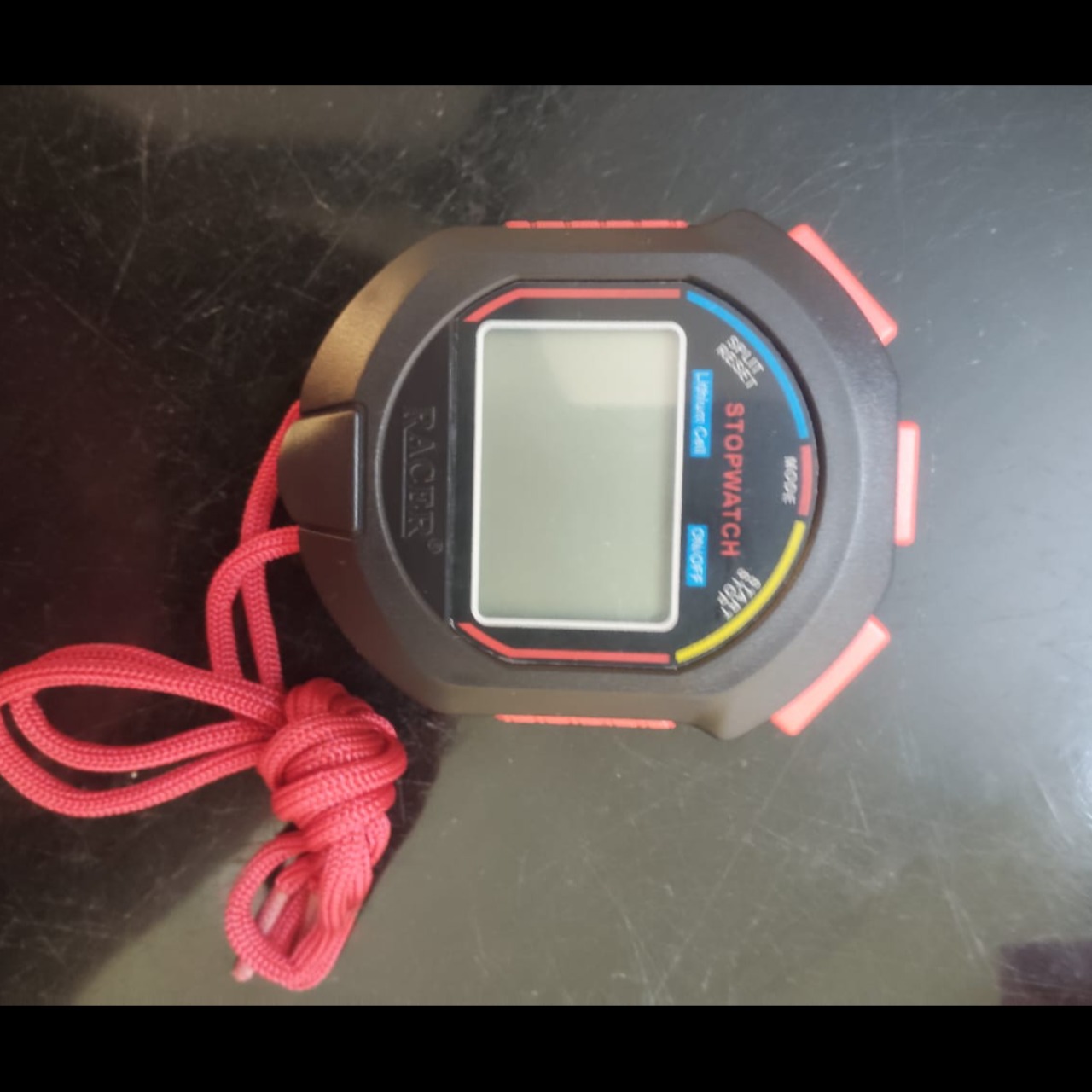
A stopwatch is a timepiece for measuring time intervals, featuring start, stop, and reset buttons for precise timing of events. Details include: it can be mechanical or digital, with digital models displaying time in minutes, seconds, and sometimes milliseconds or 1/100th seconds, and many include advanced features like memory, lap timing, and date/alarm functions. How it works Mechanical stopwatches: Use gears, springs, and levers and are wound by a knob that also controls the start, stop, and reset functions. Digital stopwatches: Use electronic circuits and batteries to display time on an LCD screen, controlled by buttons for starting, stopping, and resetting. Key features Buttons: Typically includes a start/stop button and a reset button. Some have a mode button to change settings or a 'split' button for lap timing. Display: Digital models show time in various formats and many have large, easy-to-read displays. Split timing: Allows you to pause the timer to record a lap's time while the main timer continues running. The timer can then be restarted or stopped. Memory: Many professional stopwatches have memory to store lap times and other data. Other functions: Common additional features include a clock with alarm, calendar display, and sometimes a compass or water resistance. Accuracy Precision: Digital stopwatches can achieve a high degree of precision, often measuring to the 1/100th of a second. Measurement: The time measured can be in minutes, seconds, and fractions of a second. Common uses Sports: Measuring the duration of races, sprints, and other athletic events. Science: Timing experiments, such as the time it takes for an object to roll down a ramp. Education: Used in schools to teach concepts like speed, duration, and frequency.
Have a question? Ask here!
Required fields are marked *