

2025-07-25T07:46:51
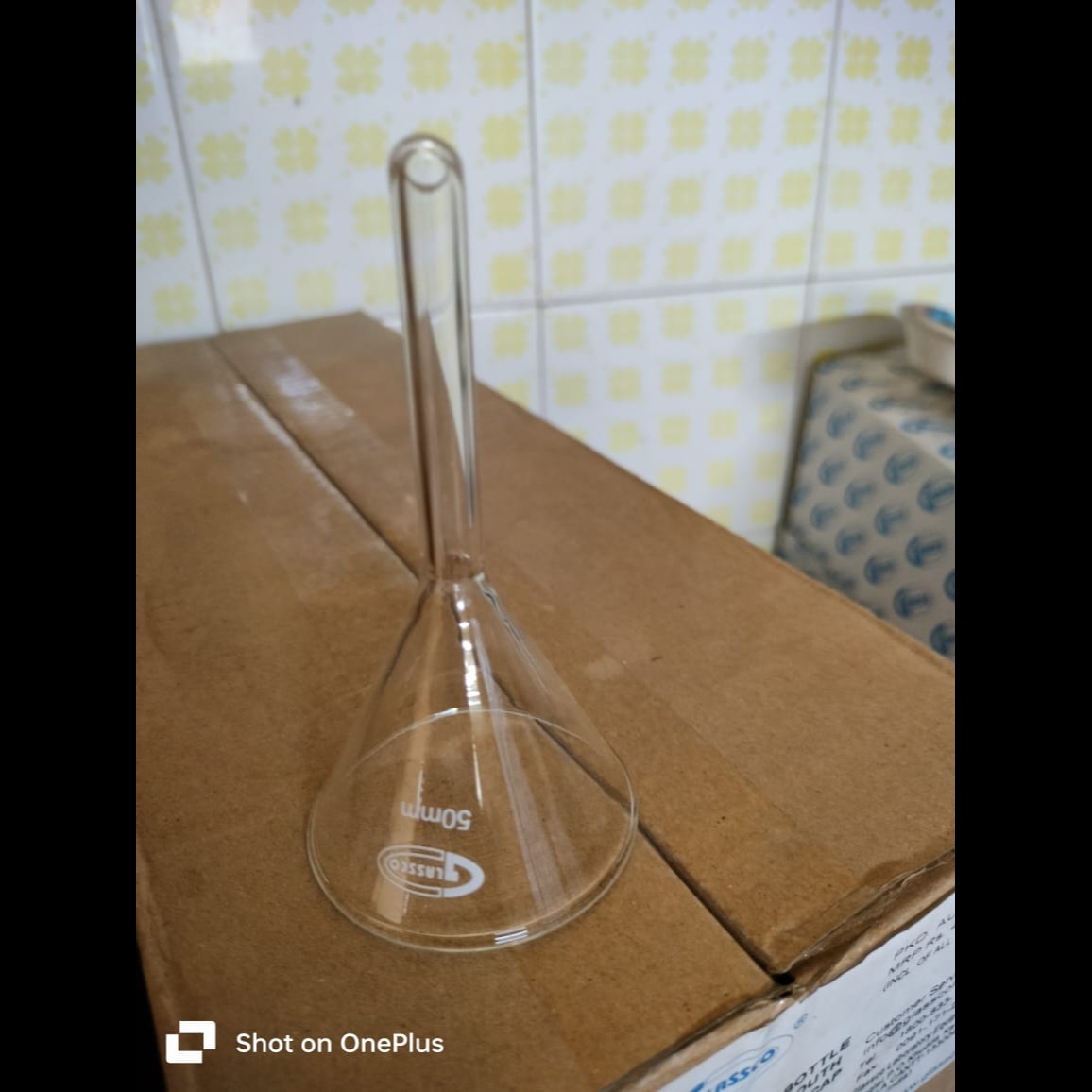
In a laboratory, funnels are primarily used to transfer liquids or powders into containers with narrow openings, preventing spills and contamination. They also play a crucial role in filtration processes, particularly when combined with filter paper or other filtration media. Funnels are essential for safely pouring liquids from larger containers into smaller ones, like flasks or test tubes, minimizing the risk of spills. Specialized powder funnels are designed with a wide opening and a large bore to facilitate the transfer of dry powders or granular materials without clogging. Filter Paper: Filter funnels, when used with filter paper, allow for the separation of solid particles from a liquid. The liquid passes through the filter paper, while the solids are retained. Büchner and Hirsch funnels: These specialized funnels can be used with filter paper or sintered glass frits for more demanding filtration applications, including vacuum filtration. Dropping Funnels: Equipped with stopcocks, dropping funnels allow for the controlled addition of liquids to a reaction. Thistle Funnels: Have a thistle-like shape, often used for specific reactions or processes. Tullgren Funnel: A specialized funnel used in biology to collect arthropods from plant litter or similar materials. Glass: Commonly made of borosilicate glass, which is heat and chemical resistant. Plastic: Available in various plastics like polyethylene or polypropylene, often used for their durability and resistance to breakage.
Have a question? Ask here!
Required fields are marked *