

2025-11-03T10:25:10
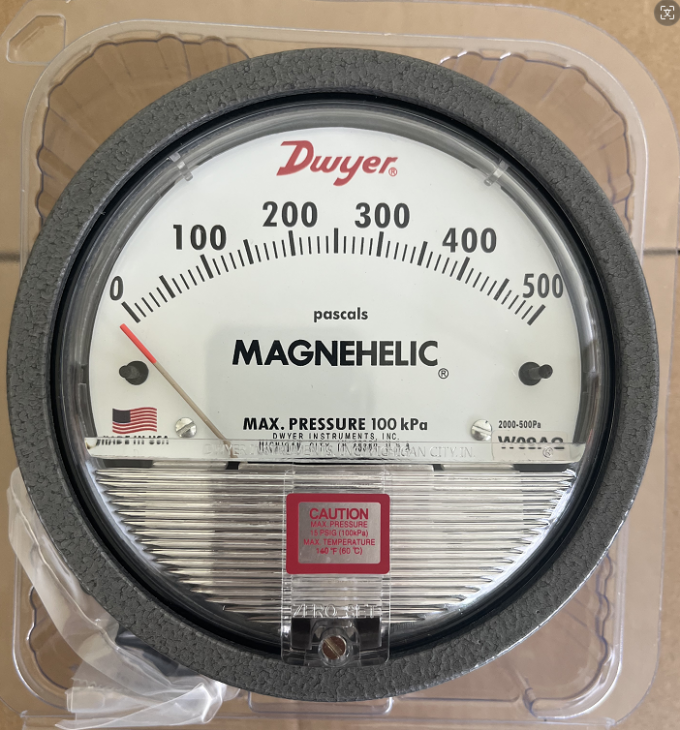
A Magnehelic gauge measures differential pressure using a pressure-sensitive diaphragm. As pressure changes, the diaphragm moves, shifting a magnet that is attached to it. This magnet rotates a helix connected to the pointer, which moves across a calibrated scale to indicate the pressure difference. Step-by-step explanation Diaphragm Movement: Pressure is applied to both sides of a flexible, silicone diaphragm. The difference in pressure causes the diaphragm to move. Magnet and Helix: A magnet is attached to the diaphragm. As the diaphragm moves, the magnet moves with it. The magnet is connected to a helix (a helical-shaped gear). Pointer Rotation: The movement of the magnet causes the helix to rotate. Since there are no mechanical linkages, the rotation is direct and precise. The helix is connected to a pointer on the outside of the gauge. Pressure Indication: The pointer rotates to the corresponding position on the calibrated scale, showing the differential pressure. Key features No Mechanical Linkages: The design uses a magnetic link rather than gears or linkages, which improves accuracy and reliability. Rugged and Reliable: Magnehelic gauges are known for being durable and are widely used in applications like HVAC systems, cleanrooms, and filtration setups. Easy to Use: The gauge is simple to install and read, often requiring only the connection of two pressure ports with tubing. Calibration: To ensure accuracy, the gauge should be calibrated regularly.
Have a question? Ask here!
Required fields are marked *