

2024-09-23T05:41:40
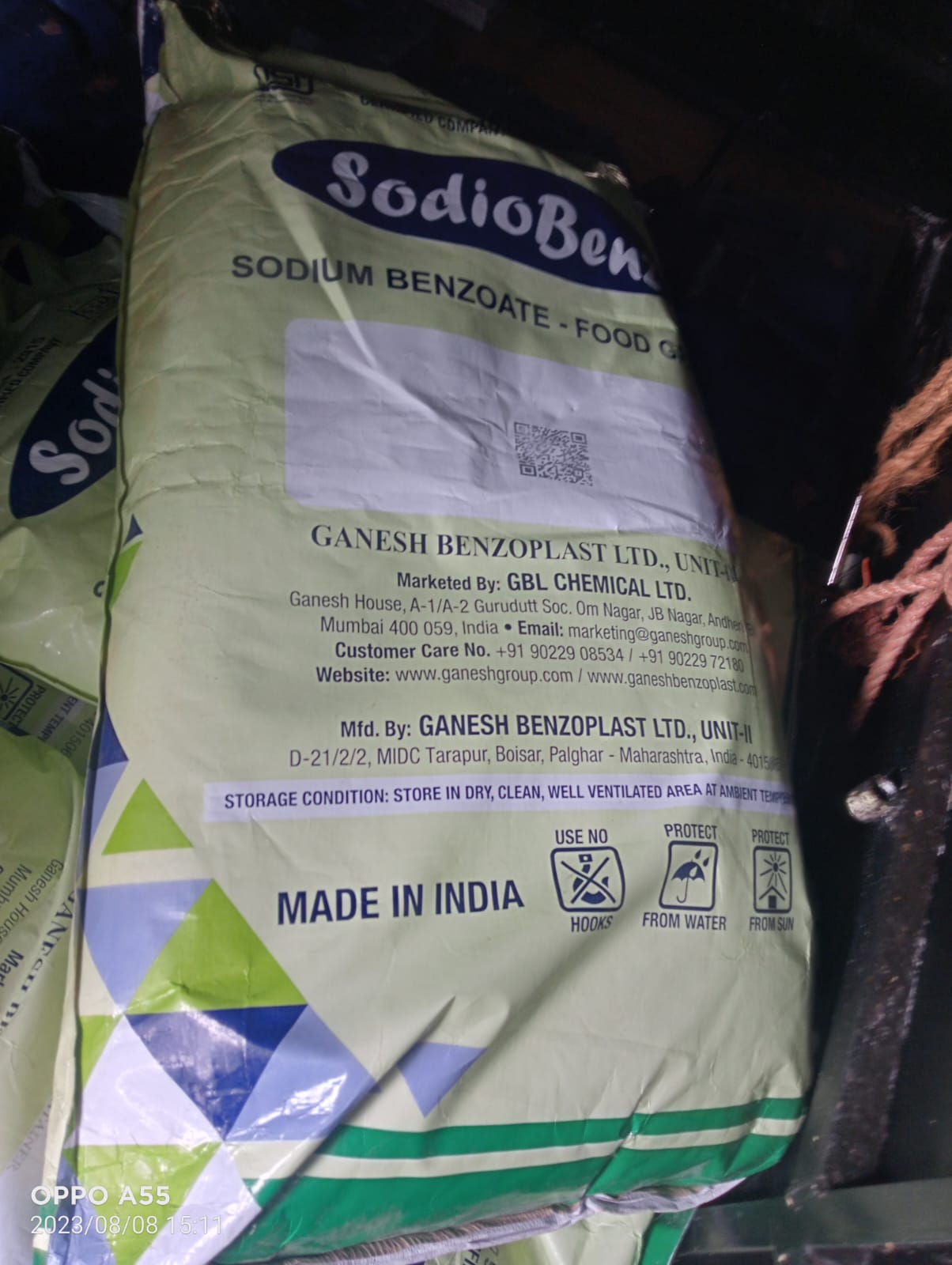
Sodium benzoate can act as a food preservative. It is most widely used in acidic foods such as salad dressings (for example acetic acid in vinegar), carbonated drinks (carbonic acid), jams and fruit juices (citric acid), pickles (acetic acid), condiments, and frozen yogurt toppings. It is also used as a preservative in medicines and cosmetics.[6][7] Under these conditions it is converted into benzoic acid (E210), which is bacteriostatic and fungistatic. Benzoic acid is generally not used directly due to its poor water solubility. Concentration as a food preservative is limited by the FDA in the U.S. to 0.1% by weight.[8] Sodium benzoate is also allowed as an animal food additive at up to 0.1%, per the Association of American Feed Control Officials.[9] Sodium benzoate has been replaced by potassium sorbate in the majority of soft drinks in the United Kingdom.[10] In the 19th century, sodium benzoate as a food ingredient was investigated by Harvey W. Wiley with his 'Poison Squad' as part of the US Department of Agriculture. This led to the 1906 Pure Food and Drug Act, a key event in the early history of food regulation in the United States. In pharmaceuticals Sodium benzoate is used as a treatment for urea cycle disorders due to its ability to bind amino acids.[11][12] This leads to excretion of these amino acids and a decrease in ammonia levels. Recent research shows that sodium benzoate may be beneficial as an add-on therapy (1 gram/day) in schizophrenia.[13][14][15] Total Positive and Negative Syndrome Scale scores dropped by 21% compared to placebo. Sodium benzoate, along with phenylbutyrate, is used to treat hyperammonemia.[16][17] Sodium benzoate, along with caffeine, is used to treat postdural puncture headache, respiratory depression associated with overdosage of narcotics, [18][19] and with ergotamine to treat vascular headache.[20]
Have a question? Ask here!
Required fields are marked *