

2025-07-28T10:39:18
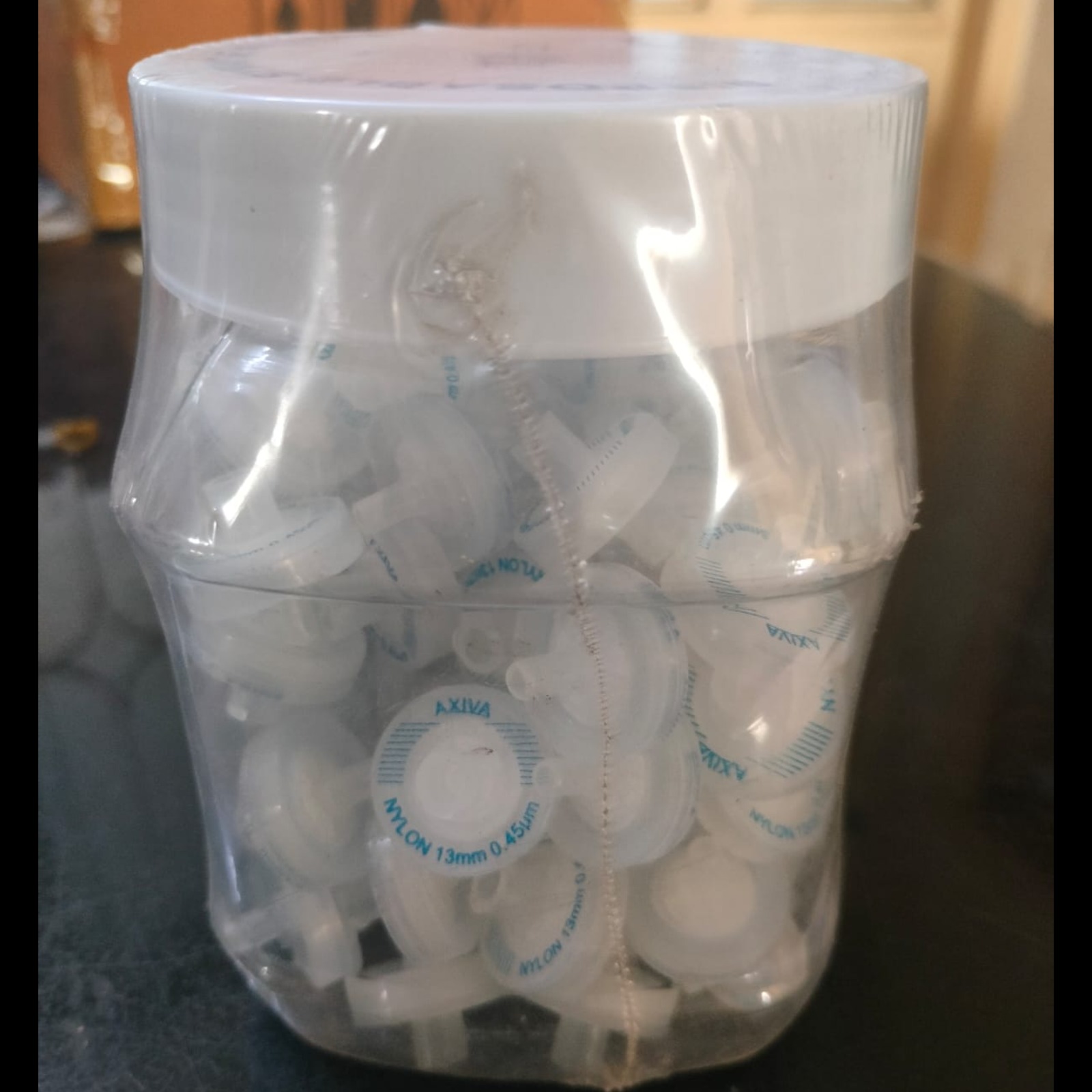
A syringe filter (sometimes called a wheel filter if it has a wheel-like shape) is a single-use filter cartridge. It is attached to the end of a syringe for use. Syringe filters may have Luer lock fittings, though not universally so. The use of a needle is optional; where desired it may be fitted to the end of the syringe filter. A syringe filter generally consists of a plastic housing with a membrane that serves as a filter. The fluid to be purified may be cleaned only by being pushed through the filter from syringe, it cannot be drawn into the syringe through the filter due to its one way process. Syringe filters may be used to remove particles from a sample, prior to analysis by HPLC or other techniques involving expensive instruments. Particles easily damage an HPLC due to the narrow bore and high pressures within. Syringe filters are quite suitable for Schlenk line work, which makes extensive use of needles and syringes (see cannula transfer). Being relatively affordable, they may be used for general purpose filtration, especially of smaller volumes where losses by soaking up filter paper are significant. Syringe filters are also available for the filtration of gases, and for the removal of bacteria from a sample. Disk filters are frequently used for the onsite manufacture of parenteral drugs and sterile eye drops, in order to remove microbiological contaminations (sterile filtration)
Have a question? Ask here!
Required fields are marked *